Privacy in clinical software: practical questions before adoption
Privacy starts with choosing data that is necessary for a clear purpose, reviewing access, handling copies carefully, and requiring concrete answers about a supplier's data lifecycle.
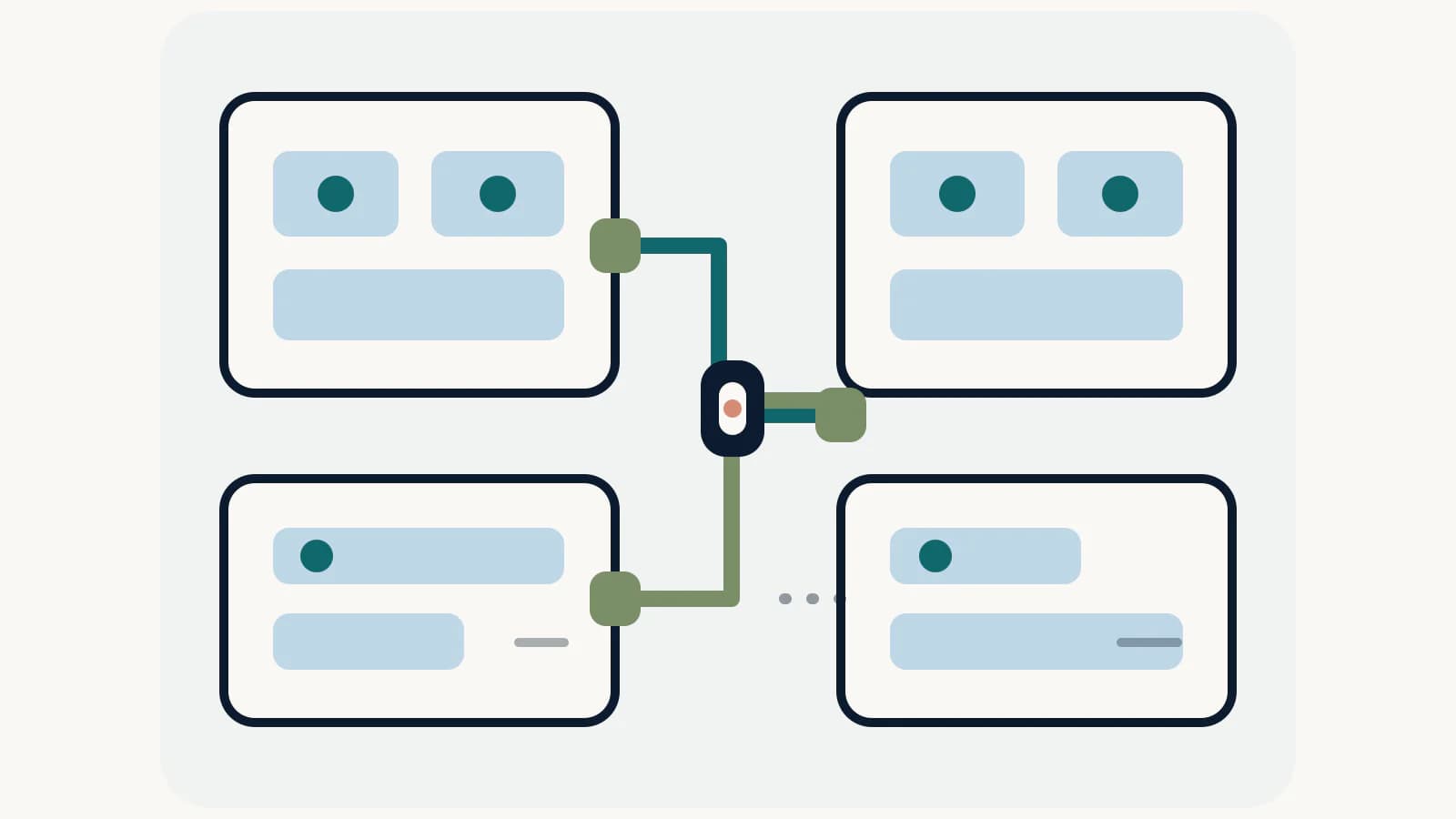
Start with purpose, then decide on data
Before adding information to clinical software, the first question is not 'How much can this field hold?' but 'What does this task genuinely require?' Data minimisation means keeping information that is adequate and relevant to a defined purpose without collecting extra detail simply because storage is available. More data does not automatically make a better record.
ICO guidance derives the minimum necessary data from the purpose and recommends reviewing whether held information remains relevant. KVKK materials emphasize that safeguards need to reflect the controller's structure, activities, risks, and the nature of the data. In practice, this calls for contextual judgment instead of filling every available field to the same depth in every situation.
Appropriate versus unnecessary data entry
These examples illustrate workflow distinctions; they are not a legal record schedule for a particular organization:
- Appropriate — entering the time and contact information needed to arrange an appointment in the authorized area designed for that task.
- Appropriate — keeping a clinical note only in the relevant clinical-record area and at the level of detail needed for the professional purpose.
- Appropriate — preserving the author, date, and supporting context when a record contains an opinion or interpretation.
- Unnecessary — collecting unrelated sensitive detail on the chance that it may become useful later.
- Unnecessary — placing client, patient, or clinical content in a marketing, beta-application, or general contact form.
- Unnecessary — making uncontrolled copies of the same sensitive record in personal downloads, email, or shared folders.
Review account, role, and team access
Access should not follow from team membership alone. Permissions in the relevant area, sharing rules, record ownership, professional duties, and lifecycle restrictions all matter. Where you manage team access, grant only what a person needs for their work and review it promptly when responsibilities change or somebody leaves.
KVKK's guide to technical and administrative measures discusses limiting access according to work, authority, and responsibility, alongside access-control matrices and user-account management. In practical terms, a team should periodically review who can view, export, share, approve, or otherwise perform sensitive actions in each area.
Shared devices and session hygiene
Do not leave an account open on a shared or borrowed device, share passwords, or assume the browser will never retain sensitive information in an unexpected place. Lock the device when stepping away, sign out when work is complete, and check where downloaded files remain.
If personal devices are permitted, the organization should define the conditions for use, what happens after loss or theft, and how local copies are handled. No single technical feature can preserve privacy independently of user practice and organizational process.
Imports, exports, downloads, and sharing
Moving records from another system is not only a file-transfer task. The team needs to decide which fields are necessary and how incorrect matches or malformed rows will be reviewed. An export or download creates another copy, so the recipient, purpose, storage location, and deletion route for that copy need attention.
Verify the recipient and your authority before sharing. Exclude fields that are not needed, avoid making personal email or unclear file-sharing channels the default, and establish where an incorrect share should be reported. When reporting an incident, do not duplicate more clinical content than is necessary to describe and manage the problem.
Public AI tools require a separate assessment
A quick summary may look convenient, but pasting client, patient, or sensitive clinical content into an external tool with unclear retention, access, training, and deletion boundaries can create a new processing context. A team should understand where data is held, who can access it, which subprocessors are involved, and whether input is used for another purpose before normalizing that transfer.
Removing a name does not necessarily make the remaining text anonymous or risk-free. Combined details may still identify a person. 'No name included' is therefore not a complete privacy assessment.
A checklist for suppliers and your own team
Before adoption and during use, answers should be written, understandable, and consistent with actual product behavior:
- What data is processed for which purpose, and are required fields clearly separated from optional ones?
- Where is data stored, which service providers participate, and how is access limited by role and task?
- How are team access, sharing, and other sensitive actions reviewed and recorded?
- What new copies are created by imports, exports, downloads, and backups?
- How do retention, deletion, account closure, and portability work in the real service rather than only in policy language?
- How is an incident detected, communicated to users and relevant parties, and assigned to a responsible owner?
- Are the supplier's contract, interface, and support answers consistent, and how are changes communicated?
- Has your organization assigned owners for purpose, access lists, device rules, and periodic review?
Privacy-conscious is not a certification claim
Privacy-conscious design is an approach that brings data minimisation, appropriate access, an understandable lifecycle, incident readiness, and safe user practice together. A security feature, a reference to a foreign framework, or a supplier's marketing statement does not automatically establish legal compliance.
Appropriate technical and organizational measures depend on the nature of the information, service scope, organizational role, contracts, and applicable law. Small teams should ask these questions concretely and seek context-specific legal, data-protection, or information-security advice where needed.
Privacy, legal, and scope boundary
Privacy-conscious design is not a certification or an absolute-security claim. This page does not promise automatic KVKK or GDPR compliance, zero access, legal sufficiency, or one security model for every setting. Organizational and legal duties depend on the actual service and processing context.
Sources
- Veri Güvenliğine İlişkin Yükümlülükler — Kişisel Verileri Koruma Kurumu
- Kişisel Veri Güvenliği Rehberi (Teknik ve İdari Tedbirler) — Kişisel Verileri Koruma Kurumu
- Principle (c): Data minimisation — Information Commissioner's Office
- A guide to data security — Information Commissioner's Office
About this Note
The Eunora Editorial Team prepared this resource after reviewing KVKK materials on data-security obligations and technical and administrative measures, together with ICO guidance on data minimisation and security. Foreign guidance is not presented as Turkish legal advice, and citation does not amount to an Eunora certification or regulator endorsement.
The Note provides general operational questions. Every organization's legal role, professional duties, data flows, and risks differ; suitable measures need to be assessed by qualified people in the actual context.