Clinician-led AI: from draft to approved record
In clinician-led AI, an output is a proposal or draft; it does not become an approved clinical record without visible sources, review, correction, rejection, approval, and accountability.
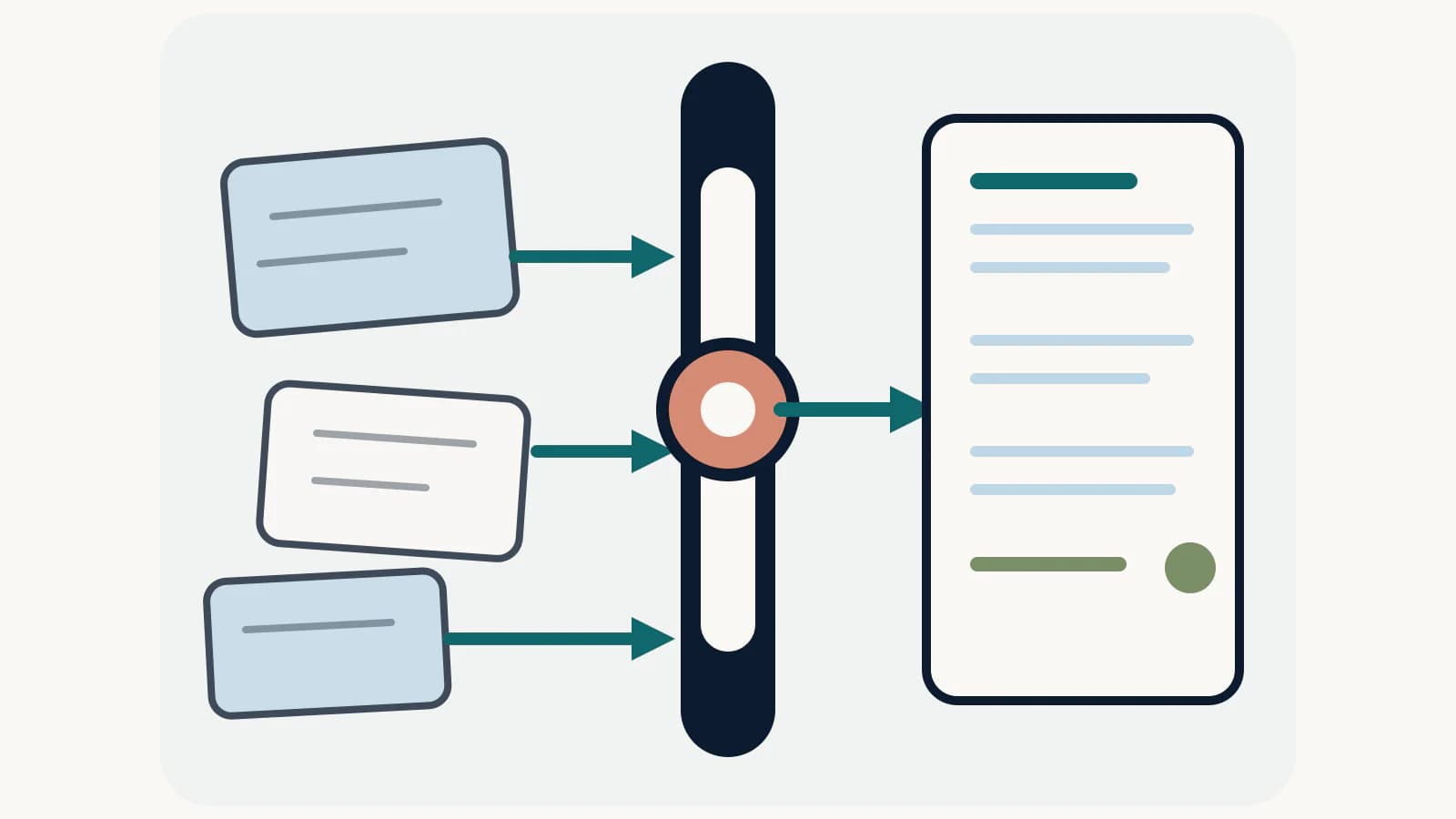
Oversight is a visible workflow, not a label
Human-in-the-loop AI is useful shorthand for a system in which a person remains involved in reviewing and acting on output. In clinical documentation, however, a 'human reviewed' label is not enough. The product must show where professional control occurs and must not change the meaning or status of a record without a deliberate clinician action.
WHO's health-AI guidance emphasizes protecting human autonomy, keeping humans in control of health decisions, and establishing points of human supervision. NIST's AI RMF calls for human-oversight processes, roles, and responsibilities to be defined and documented. Applied to documentation, those principles support an explicit, traceable transition between a generated draft and an approved record.
What should the draft lifecycle look like?
Each step has a different meaning when a documentation tool prepares material for review. The sequence below shows why generated output is not the final record:
- Identify the source: show which authorized note, document, or structured record informed the draft.
- Create a draft: keep generated material visually and semantically separate from the approved note.
- Compare it with the source: ask the clinician to look for omissions, errors, misplaced context, and unnecessary detail.
- Correct, reject, or rework: allow the professional to refuse the output instead of steering every path toward acceptance.
- Approve explicitly: only an intentional professional action changes the record state.
- Preserve attribution and an audit trail: make it possible to understand what was generated, who reviewed it, and when approval occurred.
A hypothetical draft-to-approval example
This invented example contains no clinical case content. A clinician asks for an organizational draft based on structured headings in an authorized encounter record. The system presents a draft with links back to the relevant records and keeps it outside the approved-note area.
The clinician finds that one sentence sounds more certain than its source, removes it, and rewrites two headings. Another proposed sentence is irrelevant and is rejected. After completing the review, the clinician uses an explicit approval action to save the final text. The activity history shows that software prepared the draft, the professional made the edits, and the professional supplied the approval.
Responsibility in this workflow does not sit on the final button alone. The clinic that selects the tool, the team that configures its use, the supplier that operates it, and the professional who approves a record hold different responsibilities. Auditability makes that chain easier to examine; it does not declare an AI output correct.
Fluent text is not the same as a reliable record
Generative AI can state incomplete or false information in confident language. NIST describes confidently presented but erroneous content as confabulation and identifies automation bias as excessive deference to automated systems. A review step therefore needs to examine more than spelling and style.
The clinician needs to ask whether the cited source supports the statement, whether a summary erased an important distinction, whether opinion has been presented as fact, and whether uncertainty remains visible. Default approval, interfaces that reward speed over scrutiny, or draft styling that resembles a final record can all weaken the review.
Team responsibility and auditability
Clinician oversight does not mean transferring every risk to one user. A team needs to define which tasks may use AI, what data may be supplied, who can create or approve drafts, how concerns are reported, and when the system should be paused or removed from a workflow.
Activity records should show state changes, user actions, and relevant source references without needlessly duplicating clinical text. Corrections and rejections matter as much as approvals. Recording only successful acceptance hides errors and deprives the team of evidence needed to improve or discontinue the system.
A practical adoption and review checklist
A clinical team evaluating draft support should look beyond the demonstration:
- Is draft material unmistakably separate from approved records and protected from being read as final by mistake?
- Can the reviewer see sources, timing, and the relevant record version while checking the output?
- Can a user edit, partly accept, or reject the output without friction or pressure to approve?
- Is approval explicit and intentional, with no default or bulk automatic approval path?
- Are roles, training, incident reporting, feedback, and authority to stop use clearly assigned?
- Does the team review automation-bias risks and known system limits over time rather than only at launch?
Product direction versus the current private beta
This Note describes Eunora's safety and product direction for any future AI-assisted drafting. It does not mean broad generative-AI drafting is released in the current private beta. When a feature is not available, product and marketing language should not imply otherwise.
If draft support is introduced later, separate states, visible sources, explicit professional approval, and auditable actions should be part of the product behavior. Those controls do not guarantee clinical correctness; they establish conditions for meaningful review.
Clinical boundary
Eunora does not position AI as diagnosis, treatment recommendation, risk scoring, emotion inference, or a client-facing therapy chatbot. Where AI output is used, it is not an approved clinical record until a professional reviews and explicitly approves it.
Sources
- Ethics and governance of artificial intelligence for health — World Health Organization
- Artificial Intelligence Risk Management Framework (AI RMF 1.0) — National Institute of Standards and Technology
- Artificial Intelligence Risk Management Framework: Generative Artificial Intelligence Profile — National Institute of Standards and Technology
About this Note
The Eunora Editorial Team prepared this resource after reviewing WHO health-AI governance and the NIST AI RMF and Generative AI Profile on human oversight, provenance, evaluation, automation bias, and responsibility. Citation does not mean that those organizations endorse Eunora or that the product complies with their frameworks.
This is professional-facing product and workflow information. It is not clinical guidance, legal advice, or an assessment that any AI system is suitable for a particular use.